
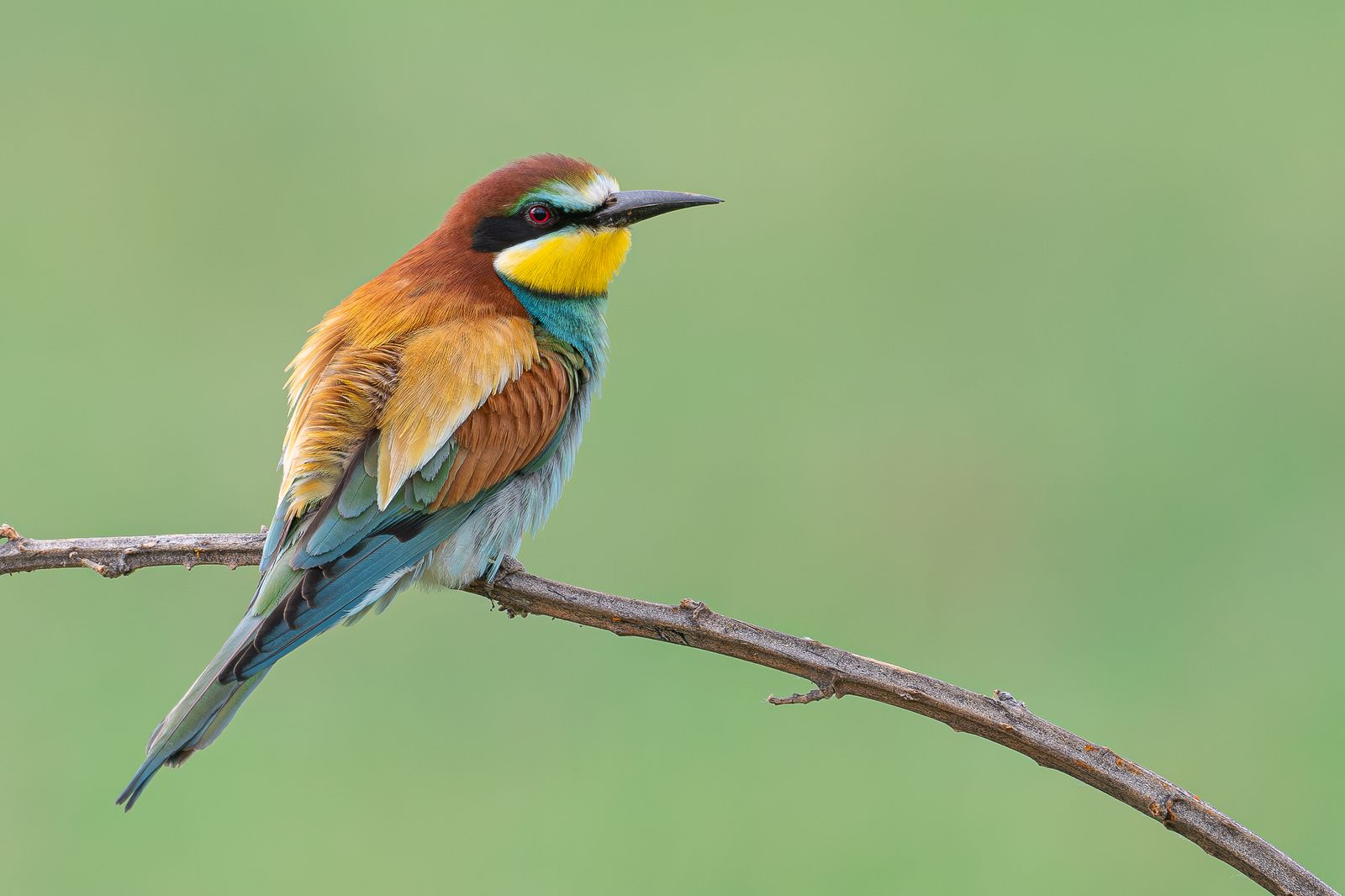
European Bee-eater · © Birding in Greece
Birds of Greece
Discover the Birds of Greece & its Birding Destinations
Explore our complete list of the Birds of Greece, featuring each species’ status, Rarity Code and IUCN Red List category. Discover our Rarity Codes, explore the country’s diverse regions and birding hotspots, and find inspiration for your next birding adventure in one of Europe’s most rewarding birding destinations.
Full Checklist →Preview
Checklist of the Birds of Greece
This checklist presents the avifauna of Greece, following the taxonomy and nomenclature of AviList (2026). It includes 487 species and taxa: 460 in the main checklist and 27 in the additional sections.
| No | Species | Category | Rarity Code | Status | IUCN |
|---|---|---|---|---|---|
| 1 | White-headed DuckOxyura leucocephala | A | 3 | W | EN |
| 2 | Mute SwanCygnus olor | A | 1 | R/W/PM | LC |
| 3 | Bewick's SwanCygnus columbianus | A | 2 | W | LC |
| 4 | Whooper SwanCygnus cygnus | A | 2 | W | LC |
| 5 | Brent GooseBranta bernicla | A | 5 | Vag | LC |
| 6 | Red-breasted GooseBranta ruficollis | A | 3 | W | VU |
| 7 | Snow GooseAnser caerulescens | A | 5 | Vag | LC |
| 8 | Greylag GooseAnser anser | A | 2 | R/W | LC |
| 9 | Lesser White-fronted GooseAnser erythropus | A | 3 | W | VU |
| 10 | Greater White-fronted GooseAnser albifrons | A | 2 | W | LC |
Birding Regions

Currently under development
Rarity Alerts
Our Rarity Codes
The Rarity Codes presented here are an unofficial classification of bird species in Greece, developed for the Rarity Alert section of Birding in Greece. Inspired by the American Birding Association (ABA) system, these codes are based on our personal assessment and aim to help birders and visitors understand the relative rarity of a sighting - therefore not representing an official classification by the Hellenic Rarities Committee. Our Rarity Alert includes all species of Codes 4 and 5, non-resident Code 3 species, as well as selected Code 2 regional rarities.
- 1
Code 1: Common species
Widespread resident species, common breeding, migratory and winter visitors, frequently occurring throughout most of mainland and/or island Greece (including common seabirds).
- 2
Code 2: Uncommon species
Regularly occurring resident and/or visiting species that are generally less numerous, less widespread, or more regionally distributed (e.g., only in Northern Greece) than Code 1 species. Note that some species in this category may be harder to observe (due to their habits or distribution) than some in Category 3.
- 3
Code 3: Scarce species
Annual visitors with only a few records in Greece each year or resident and breeding species with an extremely restricted range (e.g. Capercaillie, Bearded Vulture, Pheasant). This includes established winter visitors with very small or restricted populations (e.g. Lesser White-fronted Goose, White-headed Duck), as well as most species that were until recently included in the Committee’s “Rare Birds List” (e.g., Velvet Scoter, Blue-cheeked Bee-eater).
- 4
Code 4: Rare species
Species that occur irregularly and not annually in Greece, with at least 5 documented records during the last 30 years, showing an established but irregular pattern of occurrence. This category includes occasional (but not annual) winter visitors (e.g. Common Eider, Pallas’s Gull), as well as rare species that only very recently established a known wintering site (e.g., Finsch’s Wheatear, Pine Bunting).
- 5
Code 5: Accidental species
Species with fewer than 5 documented records in Greece during the last 30 years, only occurring as accidental vagrants.
- 6
Code 6: Extinct species
Species listed in Greece’s checklist, but which have either become globally extinct (Slender-billed Curlew) or, due to their current distribution, are unlikely to be observed again in the country (Black Francolin). This includes introduced species that once maintained viable populations but are now observed only as escapees (Red-legged Partridge).
Rare Birds in Greece
The Hellenic Rarities Committee
The Hellenic Rarities Committee (HRC) was established in December 2004 to monitor, document and evaluate records of rare and unusual bird species in Greece. It is a joint initiative of the Hellenic Ornithological Society (BirdLife Greece) and the Hellenic Bird Ringing Centre, operating independently of both organisations.
The Committee plays an important role in documenting Greece’s avifauna by assessing records of species new to the country, scarce vagrants, unusual concentrations of birds and sightings outside their normal distribution or season.
The HRC publishes annual reports presenting the records evaluated and accepted for each year. It is also the official authority responsible for the addition or removal of species from the national bird list.
All birders visiting or living in Greece are encouraged to submit detailed descriptions, photographs and sound recordings of rare or unusual observations to the Committee by completing the Unusual Sighting Report Form below.
Send the completed form by e-mail to [email protected].