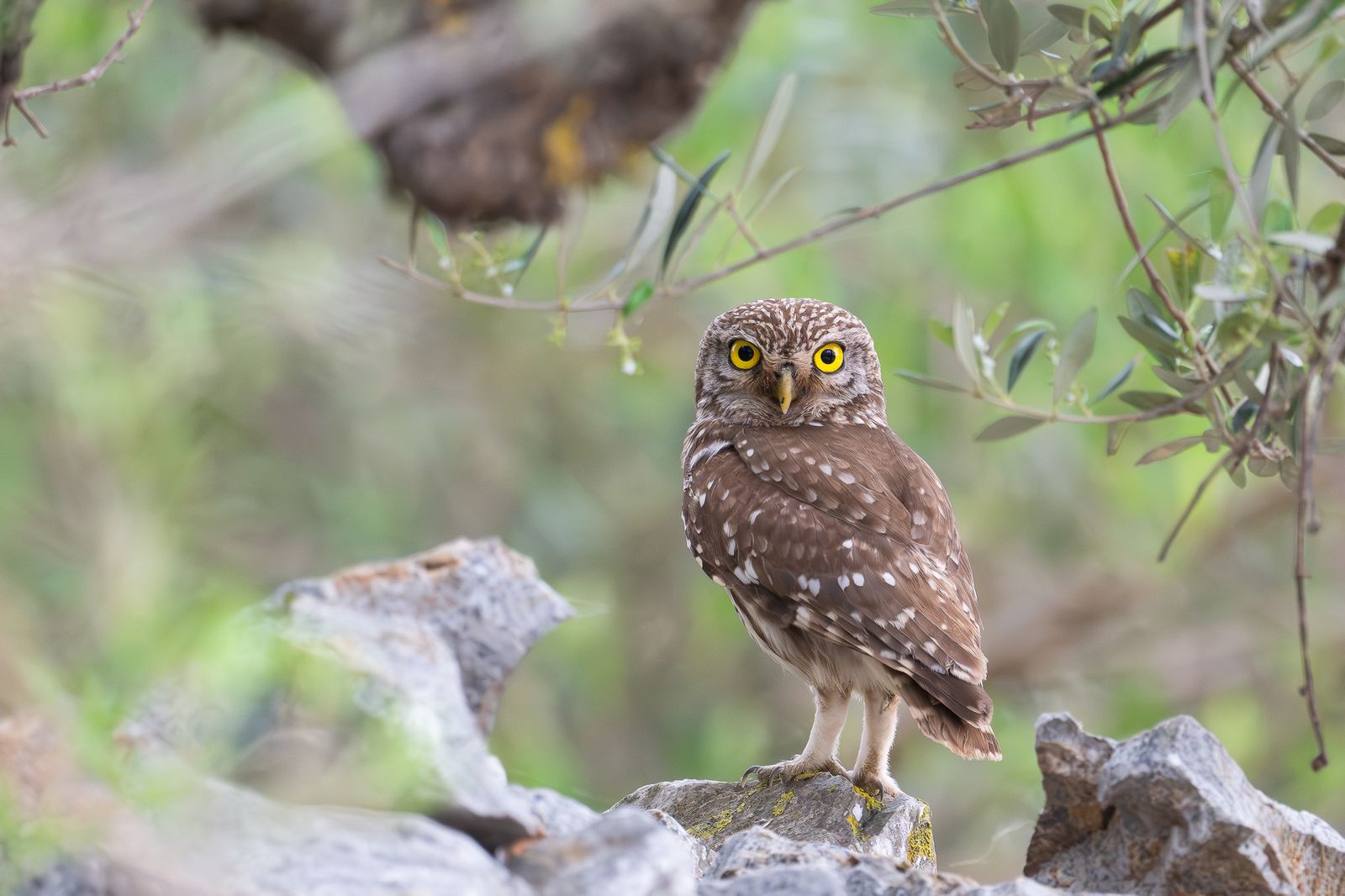
Little Owl · © Birding in Greece
Ethical Birding
Good birding leaves no trace
We believe birdwatching should always put birds and their welfare first. Every tour we lead follows a simple Ethical Birding Code that reflects our commitment to responsible, respectful and sustainable birding. These principles guide the way we observe, photograph and interact with wildlife, nature and local communities.
Our Ethical Birding Code
- 1
Birds come first
The well-being of every bird and its habitat is always a priority. If a bird shows any signs of stress, we move away.
- 2
Keep a respectful distance
We always stay well back from nests, roosts, and breeding sites, and we never flush a bird to get a better look.
- 3
No playback
We never use any type of calls or songs to attract birds. The search for a species relies solely on knowledge, patience, and respect.
- 4
No feeding or baiting
We do not feed birds to attract them, and we do not collaborate with anyone who lures birds using food or live animals. Licensed hides are the sole exception to this rule.
- 5
Ethical photography
We do not use flash or flashlights on birds at night, and we never remove vegetation or other parts of the habitat to get a better shot.
- 6
Respect nature & people
We follow the regulations of national parks, Natura 2000 sites, and other protected areas. We stay on designated trails, close gates behind us, and always ask for permission before entering farmland or pastureland. We never leave litter behind or damage natural habitats in any way.
- 7
Sensitive sites stay secret
We never publish the exact locations of nests or sensitive breeding species (raptors, owls), even in our Rarity Alerts.
- 8
Licensed & approved hides only
We work exclusively with officially licensed hides that operate responsibly, protecting local avifauna and supporting conservation efforts.
- 9
Support local economy
Whenever possible, we give priority to family-run guesthouses, restaurants and local cuisine, so that birding benefits the places we visit.
- 10
Give back
We regularly participate in volunteer activities and monitoring programs of the Hellenic Ornithological Society, contributing to the protection of birds and their habitats. Birding in Greece also collaborates with the Hellenic Rarities Committee, to which we submit all of our rare and noteworthy sightings.
Conservation
We support the Hellenic Ornithological Society
Birding in Greece supports the work of the Hellenic Ornithological Society (HOS), the BirdLife International partner in Greece.
Our Guides regularly participate both as volunteers and professionals in bird monitoring and conservation projects led by HOS across the country.
Notable examples include various monitoring programmes held at Antikythera Bird Observatory (ABO), LIFE+ programmes as well as the International Waterbird Census every January.
We encourage guests to learn and support the work of HOS – helping protect wild birds and their habitats.
Citizen Science
Hellenic Rarities Committee
Birding in Greece also supports and collaborates with the Hellenic Rarities Committee. Our team submits all rare and notable records to the Committee and encourages all visitors to do the same – officially contributing to the knowledge of the Birds of Greece.
Download the Unusual Record Report Form on the link below and, after filling in the form, you can send it via e-mail to [email protected].
eBird
eBird, run by the Cornell Lab of Ornithology, is one of the largest citizen science projects in the world.
All our Guides voluntarily serve as local eBird Reviewers and Hotspot Editors for most of the Greek regions, ensuring that the platform continues to provide high quality scientific data.
All records made on our tours are submitted by our Guides on eBird and, if requested, shared with our guests’ accounts.