
Four New Important Bird and Biodiversity Areas (IBAs) in Greece
10 May 2026 · Peloponnese, Western Macedonia and Thrace
Four new sites in Greece have been officially included in the global network of Important Bird and Biodiversity Areas (IBAs), recognising their international importance for bird conservation and highlighting Greece’s role along major migratory routes.
The addition follows a proposal submitted by the Hellenic Ornithological Society (BirdLife Greece) to BirdLife International in autumn 2025. The four sites were identified through scientific data collected over recent years, including information gathered through conservation projects, LIFE programmes, projects funded by the Green Fund and systematic bird monitoring, with valuable contributions from volunteer observers.
The IBA programme has been a central part of the Hellenic Ornithological Society’s work since the 1980s, when the organisation began documenting Greece’s most important areas for birds. Following the latest additions, the national network now comprises 212 sites, covering a total area of 44,570 km².
The four newly recognised areas are:
Cape Akritas and the Sapientza and Schiza Islands (GR205)
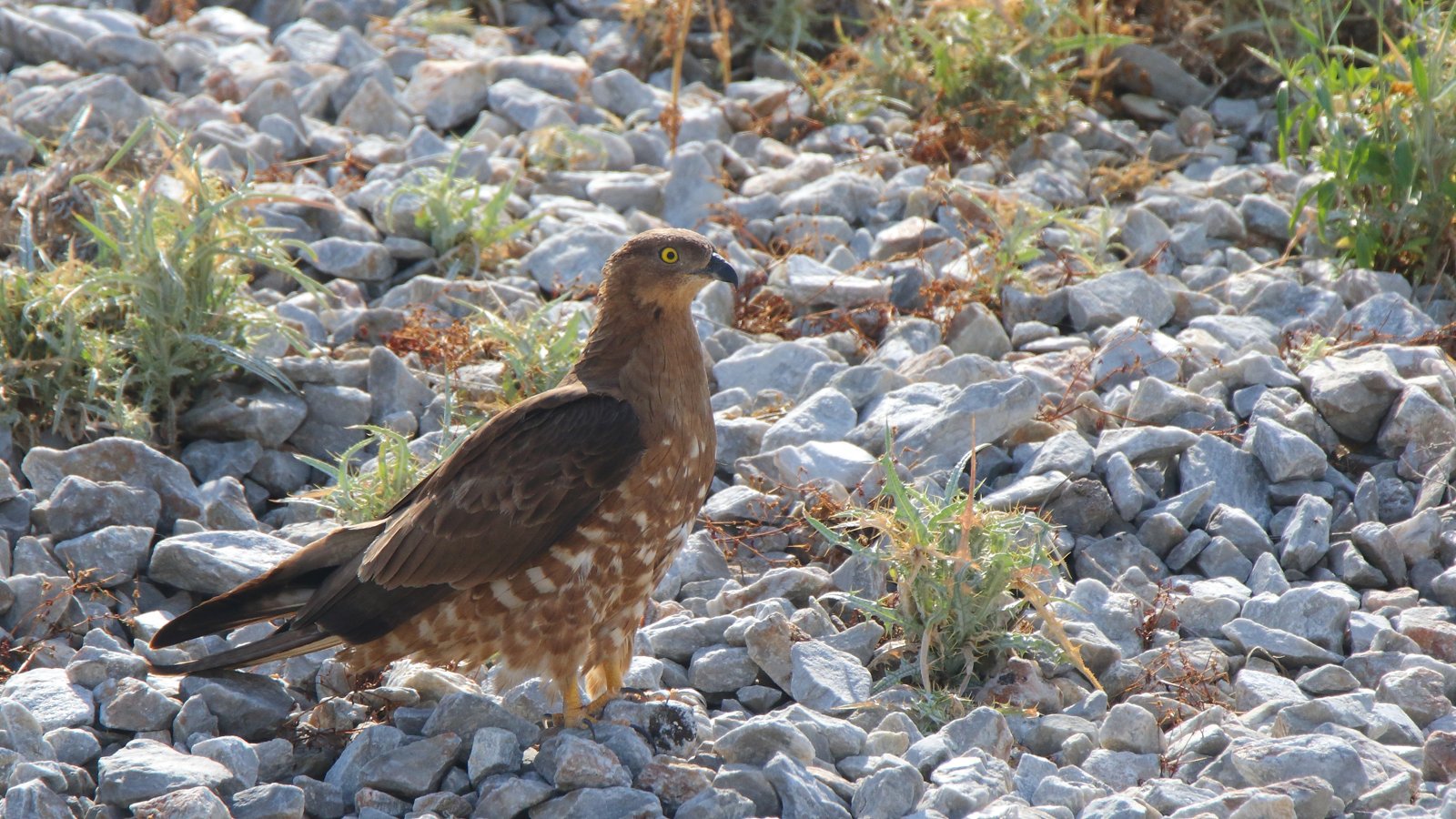
Located at the southern tip of the Peloponnese, this area is an important migration bottleneck, particularly for raptors. Recent monitoring data have identified Cape Akritas as the third most important migration passage in the Mediterranean for European Honey-buzzards (Pernis apivorus), alongside Gibraltar and the Strait of Messina.
Cape Maleas (GR206)
Another major migration bottleneck in southern Greece, Cape Maleas lies along the Peloponnese–Antikythira–Crete migration route. Beyond its importance during autumn migration, the area supports breeding raptors such as the Bonelli’s Eagle (Aquila fasciata), the Eurasian Eagle Owl (Bubo bubo) and the Short-toed Eagle (Circaetus gallicus), while also providing wintering habitat for large raptors.
Florina Wet Meadows (GR207)
This wet and pseudo-steppe grassland represents an increasingly rare habitat in Greece. The meadows support more than 50% of the country’s breeding population of Montagu’s Harrier (Circus pygargus), alongside several species associated with agricultural landscapes, including the Stone-curlew (Burhinus oedicnemus), the European Roller (Coracias garrulus), the Lesser Kestrel (Falco naumanni) and the Calandra Lark (Melanocorypha calandra).
Thracian Sea (GR254)
This extensive area of shallow marine waters in northeastern Greece is an important feeding ground for seabirds, including the Yelkouan Shearwater (Puffinus yelkouan), the Scopoli’s Shearwater (Calonectris diomedea) and the European Shag (Gulosus aristotelis). It also lies along a major migration route for birds moving to and from the Evros Delta during spring and autumn.
The recognition of these four sites is an important step towards their designation as Special Protection Areas (SPAs) under the EU Birds Directive and their inclusion in the Natura 2000 network. A proposal for their recognition as SPAs has already been submitted by a consortium of organisations involved in bird monitoring, including the Hellenic Ornithological Society.
These new additions are also a testament to the Hellenic Ornithological Society’s decades of dedicated work in identifying, documenting and advocating for the protection of Greece’s most important sites for birds. Through long-term scientific research, systematic monitoring, conservation projects and the engagement of a strong network of volunteer observers, the organisation continues to play a leading role in safeguarding the country’s outstanding avian heritage.
References
- Hellenic Ornithological Society (BirdLife Greece) – Four New Greek Sites Join the International Network of Important Bird Areas (5 May 2026).